We were extremely touched by a wonderful acceptance speech from Comedy Central’s Jack Herrguth upon receiving a GILDA Award from the Cancer Support Community – Benjamin Center last Saturday night.
Founded in 1982 by Doctor Harold Benjamin, the CSC was built upon the principle that no one should face cancer alone. Offering support groups, mind & body classes, educational and nutritional workshops, social activities, and individual counseling sessions – all free of charge. For 31 years, the CSC is home to cancer patients and survivors alike. The fun event held at the Museum of Flying on the grounds of the Santa Monica Airport also offered a gallery showcase of fine art. Conguero Louie Cruz Beltran and his wonderful orchestra rocked the party with Latin Jazz.
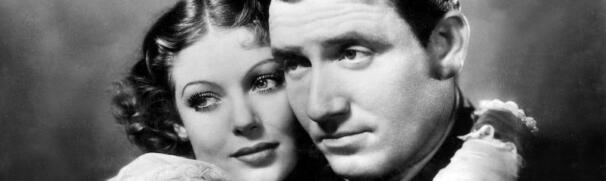
In his speech, Herrguth, a cancer survivor, graciously ruminated on the vivacious Radner who was cut down at young age by ovarian cancer. Radner had been an early supporter of the CSC and the annual award is in her honor.
Excerpts from Herrguth’s comments:
When I first received the call … that I was being honored with this award – I thought there had been some mistake. I mean, me? Gilda Radner? She was a comedy icon who conquered TV, Broadway and the movies. And me? Well, I’m wearing this red sport coat.
But the more I thought about it, I realized Gilda and I had things in common. We both like to make people laugh, we both had cancer … and we’re both women.
I first saw Gilda on Saturday Night Live when I was a little kid. And she quickly became one of my comedy heroes. Her characters were part of the cultural zeitgeist: Roseanna Roseannadanna. Emily Litella. Lisa Loopner and Baba Wawa. I used to put on my mother’s wig and sunglasses and do impressions of all these characters, whether people wanted to hear them or not.
I remember hearing that Gilda was sick, diagnosed with ovarian cancer. As I kid I wasn’t sure what ovaries were, let alone cancer, but I knew it sounded bad. But what I didn’t know was this – Gilda would become my hero in another, unexpected way – in the way she battled cancer with courage, humility, and most importantly, with laughter.
Take it from me. It’s hard to laugh at cancer…
But cancer has taught me to embrace the beauty of life and all of its uncertainties.
Or, as Rosanne Roseannadanna said, “It just goes to show you. It’s always something.”
Jews regularly ask God which way they should go. But they rarely ask this of each other. It’s usually the opposite. There tends to be a lot of bossing around.
This cultural pattern will be confounded Wednesday night at the wonderful Autry National Center, in a program called “Which Way (Jewish) L.A.?” The panel discussion is being held in tandem with an important exhibit on Los Angeles Jewish history now in full swing at the museum.
The cozy and comfortable Autry, located in the cross-hairs of lush Griffith Park and the smog-ridden Golden State Freeway, lately zeros in on cultural anthropology of Los Angeles. The new exhibit posits that L.A.’s diversity and dynamism have transformed the local Jewish community for the past 160 years.
Jews in the Los Angeles Mosaic tells the story of neighborhoods like Boyle Heights and Fairfax, people like Billy Wilder, Max Factor, and Frank Gehry, and lynchpin industries like the movies and suburban land development. Jews helped change the region by recruiting the Brooklyn Dodgers, inventing the Barbie doll, and joining other Angelenos in electing the city’s first African American mayor.
Show features more than 150 stories, documents, objects, and images of family, community, and society.
It’s a big honor to be recognized in the New York Times.
We’re awfully proud to receive a shout-out (this used to be called a “name mention”) from Dave Kehr, the highly respected film critic. In his weekly New York Times round-up of recently released DVDs,Kehr writes:
MEET ME AFTER THE SHOW The choreographer Jack Cole has been enjoying a revival lately, largely thanks to the efforts of the critic Debra Levine. This Betty Grable vehicle from 1951 (otherwise directed by Richard Sale) features some of his boldest, strangest Dalí-influenced work, including a couple of numbers that point directly to the hallucinatory “Diamonds Are a Girl’s Best Friend” in “Gentlemen Prefer Blondes.” But ghastly color reproduction renders this disc almost unwatchable. Gwen Verdon received her first screen billing as Grable’s partner in the wholly unbridled finale.
An extraordinary evening at the American Legion Hall featured a shared program with Hollywood Heritage about the Hollywood Canteen (1942 – 1945). [...]
Los Angeles is bursting with fine art and performance -- plus the best big-screen film viewing in the world. I cover the cultural beat on the Los Angeles Times and The Huffington Post. I mix it up on arts·meme, a fine arts blog.
we love comments